Introduction
A potential diner finds your restaurant on Instagram, scrolls through a handful of recent posts, then checks your reviews. One unanswered complaint from two weeks ago sits right at the top. They close the tab and book a table somewhere else.
This plays out constantly. BrightLocal's 2026 consumer survey found that **97% of consumers read local business reviews** before making a decision — and 41% said they always do. For restaurants, where word-of-mouth travels fast and margins are tight, a single ignored complaint can cost you a table tonight and a regular next month.
This guide walks through a practical, step-by-step response process for negative social media reviews and covers the most common restaurant complaint scenarios. It also explains what to avoid when things get uncomfortable. Whether you run a single neighborhood spot or manage multiple locations, the goal is the same: turn criticism into credibility.
Key Takeaways:
- Respond publicly within 24 hours, then move the conversation to a private channel
- Personalize every reply — templated responses drive customers away
- Never delete a genuine negative review; only remove content that violates platform rules
- Investigate before offering a resolution — vague promises make things worse
- Consistent monitoring across all platforms is non-negotiable — gaps are where reputation damage compounds
Why Negative Social Media Reviews Are High-Stakes for Restaurants
A complaint sent privately stays between you and the customer. A complaint posted on Facebook or Instagram is a public broadcast, visible to every potential guest researching your restaurant before they decide where to eat.
The numbers back this up. According to BrightLocal's 2026 research, 77% of US consumers said negative reviews made them less likely to choose a business. That's not a minor deterrent — it's most of your potential audience.
The Recency Problem
Most diners don't scroll back through months of reviews. They look at what's recent. BrightLocal found 74% of consumers only consider reviews from the past three months, and 27% want reviews no older than two weeks. A single unaddressed complaint posted last week isn't buried — it's front and center for every prospective guest researching your restaurant right now.
The Cost of Silence
Leaving a negative review unanswered doesn't make it go away. It signals to every reader that you either didn't notice or didn't care — neither of which builds confidence. ReviewTrackers' data shows that restaurant brands in the top performance tier averaged 1.6 days to respond and held a 4.19-star rating, compared to the industry-wide averages of 5.1 days and 3.73 stars.
Faster responses alone don't guarantee better ratings — but the pattern is consistent: restaurants that engage with reviews outperform those that don't.
How to Respond to Negative Reviews on Social Media: A Step-by-Step Guide
Step 1: Pause, Then Research Before Replying
An emotional, knee-jerk response can do more damage than the original complaint. Before typing anything, take a few minutes to:
- Check with the staff member or manager involved
- Review order records or reservation logs if the complaint references a specific visit
- Confirm whether the experience described actually occurred
Responding with accurate context protects you from making claims you'll have to retract — and shows reviewers you take complaints seriously.
Step 2: Acknowledge the Experience and Apologize Publicly
Your public reply is read by far more people than just the reviewer. Every response you post is visible to potential diners deciding where to eat next.
Write something that:
- Acknowledges the specific experience described (not a generic "sorry you felt that way")
- Uses empathetic language without being defensive
- Avoids admitting specifics that could escalate the issue publicly
Phrases that work well:
- "We're sorry your visit didn't meet the standard we aim for — this isn't the experience we want anyone to have."
- "Thank you for letting us know. We take feedback like this seriously and want to make it right."
- "We understand how frustrating that must have been, and we appreciate you telling us."
Keep it short, genuine, and free of excuses.
Step 3: Move the Conversation to a Private Channel
After your public acknowledgment, invite the reviewer to continue the conversation privately via DM, phone, or email. This does two things:
- Prevents a back-and-forth from escalating publicly
- Shows other readers you're taking action, not just performing concern
A simple add-on works: "We'd love to connect directly — please DM us or reach us at [email/phone] so we can make this right."
Step 4: Investigate and Offer a Concrete Resolution
Once the conversation moves offline, actually investigate. Talk to the team. Look at what happened. Then propose a resolution that fits the situation:
- Wrong dish or poor quality: Offer a replacement meal or a comp on their next visit
- Billing error: Issue the correction or refund promptly
- Service failure: A direct call from the manager plus a goodwill gesture
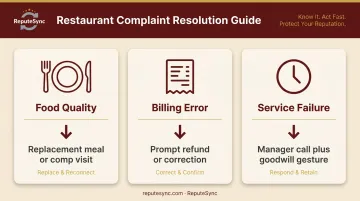
Vague promises ("we'll look into it") are worse than saying nothing. A specific remedy shows accountability.
Step 5: Follow Up and Close the Loop
After you've resolved the issue, add a brief note to the original public comment such as: "We were glad to connect with you directly and hope to see you again soon."
Prospective diners scrolling through your reviews see that complaints get addressed. That visibility builds trust before they've ever walked through your door.
Step 6: Only Delete Comments That Violate Platform Guidelines
Deleting a genuine complaint is one of the fastest ways to destroy trust. Don't do it.
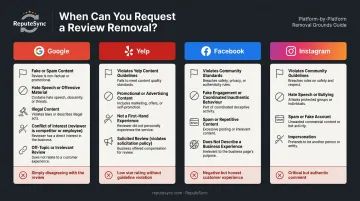
The only legitimate reasons to remove or report a review:
| Platform | Valid removal grounds |
|---|---|
| Fake engagement, harassment, hate speech, off-topic content, obscenity | |
| Yelp | Conflicts of interest, threats, hate speech, promotional content, AI-generated reviews |
| Violations of Meta's Community Standards (reported to platform, not self-deleted) | |
| Abusive or spam comments on your own posts only |
Disagreeing with a review is not grounds for removal on any platform. Attempting removal of a valid complaint almost always backfires — readers notice, and the resulting distrust is hard to undo.
Common Restaurant Review Scenarios and How to Handle Them
Food Quality Complaints
When a guest says a dish was undercooked, wrong, or just disappointing, resist the urge to offer a blanket apology. Instead:
- Reference the specific dish they mentioned
- Acknowledge the gap between what they expected and what they received
- Offer a clear path forward: "We'd love to have you back and make that dish the right way — please reach out so we can arrange it."
Generic responses signal you didn't actually read the review.
Service and Wait Time Complaints
Slow service and long waits are among the most common restaurant complaints online. The instinct to make excuses ("we were short-staffed") is understandable but rarely lands well.
What works instead:
- Acknowledge the operational failure honestly
- If you've made changes in response, say so briefly and specifically
- Avoid over-promising on future experiences you can't guarantee
"We know your time matters, and what you described isn't acceptable on our end. We're actively working on [specific change]."
Order and Billing Errors
These are concrete, fixable problems. Treat them with urgency:
- Respond quickly (same day if possible)
- Offer a specific remedy — a refund, a corrected order, a manager call
- Don't bury the resolution offer in a paragraph of explanation
Guests who see a fast, specific resolution are far more likely to give you another chance — and less likely to let the review be the last word.
Suspected Fake or Malicious Reviews
Warning signs of a fabricated or troll-driven review:
- Vague language with no specific visit details
- No prior review history on the account
- Extreme hostility with nothing actionable
- Multiple suspicious reviews appearing simultaneously
Even when a review looks fake, respond calmly and professionally. Other readers are watching. Then report the review to the platform using the appropriate channel — Google, Yelp, and Facebook each have formal processes for flagging suspicious content.
What Not To Do When Responding to Negative Reviews
A poor response can cause more damage than the original complaint. Avoid these mistakes:
Arguing publicly with reviewers. Everyone watching — potential diners included — sees that exchange. Firing back in the comments signals you'd rather win the argument than fix the problem.
Sending templated responses. BrightLocal found that 50% of consumers were unlikely to choose a business whose review responses appeared generic or templated. Dissatisfied customers spot copy-paste replies immediately — and it confirms they're not being heard.
Going silent because you're busy. Silence reads as dismissiveness. Even a brief, genuine acknowledgment within 24 hours is far better than nothing.
How to Monitor Negative Reviews Across Social Platforms
Where Negative Reviews Actually Appear
According to Toast's 2024 restaurant survey, 46% of diners check Google first, followed by 23% on Yelp, 9% on TripAdvisor, and 6% on OpenTable. Social media — particularly Instagram — accounts for meaningful discovery too, with 15% of diners finding new restaurants via social platforms.
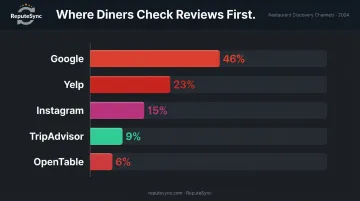
The catch: negative comments can appear on channels you don't actively manage. A complaint on a Facebook group, an Instagram story, or a TripAdvisor thread you haven't checked in weeks can sit unaddressed for days.
The Problem with Manual Monitoring
Checking each platform individually every day is genuinely time-consuming — and the more locations you operate, the harder it becomes. The risk isn't just inefficiency; it's missing reviews entirely. A complaint that goes unanswered for a week has already influenced dozens of potential diners.
Setting up basic keyword alerts and brand mention notifications helps, but it's a partial solution at best. For restaurants juggling multiple platforms, a centralized tool is the more practical path.
A Centralized Approach
Platforms like Repute Sync are built specifically for this problem. Restaurant operators get a single dashboard that covers Google, Yelp, Facebook, and TripAdvisor simultaneously, including:
- Real-time alerts when new reviews are posted
- Unified response tools across all platforms (no logging in and out)
- Sentiment tracking that surfaces recurring complaint themes over time
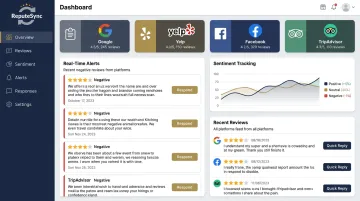
That last point matters most. When wait times, a specific dish, or a staff issue appear repeatedly across reviews, they stop looking like one-off complaints and start pointing to something that can actually be fixed.
Frequently Asked Questions
How do you respond to negative reviews on social media?
Acknowledge the experience publicly using empathetic, non-defensive language, then invite the reviewer to continue the conversation via DM, phone, or email. Once offline, investigate the issue and offer a specific resolution — not a vague apology.
Should restaurants delete negative reviews on social media?
No. Deleting genuine complaints signals dishonesty and often backfires when other users notice. The only appropriate grounds for removal are reviews containing hate speech, spam, or content that clearly violates the platform's community standards.
How quickly should a restaurant respond to a negative social media review?
Within 24 hours is the widely accepted standard, though faster is better — particularly on high-traffic platforms like Google and Yelp where recency affects how visible your responses are. Consumer expectations lean toward same-day or next-day replies, so treat it like a time-sensitive customer service channel.
What should you never say when responding to a negative restaurant review?
Never argue with the reviewer, blame them for the experience, make excuses for operational failures, or share details that could escalate the issue publicly. Keep your tone calm, take ownership where warranted, and move sensitive discussions offline.
How can negative reviews actually help a restaurant improve?
Patterns in negative feedback reveal real operational gaps. If multiple reviews mention slow service on Friday nights or a dish that consistently disappoints, that's a signal worth acting on. Track those patterns, adjust operations, and the reviews stop repeating themselves.
How do you tell if a negative review is fake or from a troll?
Watch for vague language with no specific visit details, no prior review history on the account, inflammatory tone without a real complaint, or multiple suspicious reviews appearing simultaneously. Report the content to the platform either way, and respond professionally — potential customers read how you handle it.